
Ask ten tradespeople why they quote by the hour and most say the same thing: "So I'm covered if it runs over." Fair. But look at it from the other side of the kitchen table.
What the homeowner hears
An hourly estimate says: "It'll be roughly this — but it could be more, and you won't know until it's too late to stop." For someone spending a large chunk of their savings, that's not reassurance. It's an open-ended liability.
A fixed price says: "This is what it costs. I've thought it through." It reads as confidence and competence — the two things a homeowner is actually buying.
"But fixed price means I carry the risk"
Only if you price blind. Fixed pricing feels dangerous when the quote is built from memory at 9pm. Price it properly and the risk shrinks to almost nothing. Here's a fixed price for a small guest bathroom, built up from parts:
| Line | Basis | CHF |
|---|---|---|
| Strip-out & disposal | 1.5 days labour | 1,260 |
| Waterproofing & screed | 6 m² + consumables | 820 |
| Wall & floor tiling | 18 m² labour + adhesive/grout | 3,240 |
| Wall & floor tiles (material) | 18 m² @ supplier price | 1,980 |
| Sanitary suite (WC, basin, shower) | fixtures @ supplier price | 2,650 |
| Fit & plumbing connections | 2 days labour | 1,680 |
| Subtotal | 11,630 | |
| Contingency buffer (10%) | absorbs the unknowns | 1,163 |
| Fixed price (excl. VAT) | 12,793 |
Illustrative figures for a small bathroom — not a price list. The point is the structure, not the numbers.
Notice what makes this safe: the labour is costed at a set rate, materials come from real supplier prices rather than last year's guess, and there's a single buffer line that prices the uncertainty in once, up front, where the customer can accept it cleanly. Done this way, a fixed price isn't a gamble — it's a well-understood estimate with the risk baked in.
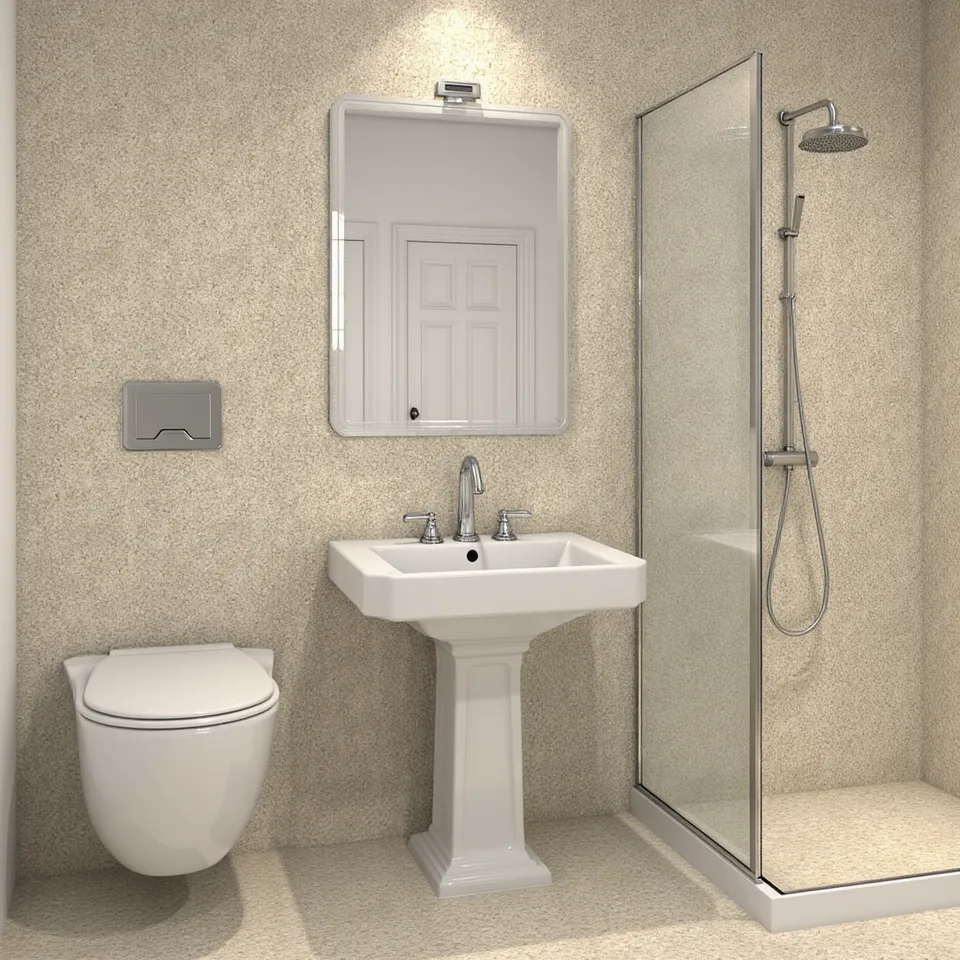 Sell the finished room, and the fixed price feels earned.
The change-order safety valve
The real fear behind hourly pricing is scope creep. The answer isn't to make the whole quote elastic — it's to make changes explicit. When the customer asks for the extra niche, the underfloor heating, or a second coat, you raise a change order: they approve it, and the price moves by a known amount, with a clean record on both sides. Nobody's surprised, so nobody's upset.
This is why tools like Mastro keep the quote fixed but make change orders a one-tap, client-signed step — the elasticity lives in the change order, not in the original promise.
The takeaway
Hourly estimates optimise for your protection and cost you the sale. Fixed prices optimise for their certainty and win it — as long as you price from real numbers and keep a clean change-order process for everything else.
Curious how the buffer and supplier costs come together in practice? Read how pricing and buffers work.